Category Archives: Conceptions of peace

Obama’s Peace, Our Occupation

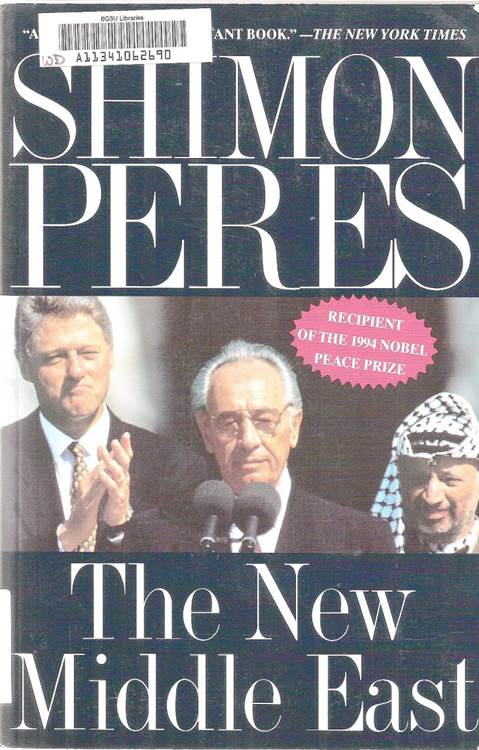
Cover of Shimon Peres' book from 1993

Cover of Shimon Peres’ book from 1993

Watching Obama's speech in Rabin square. From Peace Now facebook page.

Watching Obama’s speech in Rabin square. From Peace Now facebook page.

Despite the low expectations about President Obama’s visit to Israel and Palestine, everyone on the Israeli left seems to want to talk about his speech to Israeli students, which was also his direct address to the Israeli public rather than its politicians. Quick off the mark was Moriel Rothman in his Leftern Wall blog, who found five positive points in the otherwise biased, ‘gloop-filled’ speech, such as Obama’s call for an independent, viable Palestinian state to achieve peace, his condemnation of unpunished settler violence, and especially the phrase: ‘Neither occupation nor expulsion is the answer’. Similarly, Gush Shalom praised the speech for reminding us ‘that peace is possible and necessary, that we do have a partner for peace, … and that Israel must end the occupation’. Peace Now labelled it a ‘historic speech’. Commentators in Ha’aretz were impressed too. Ari Shavit considered the 18 minutes of the speech dedicated to the pursuit of a necessary, just and possible peace to be ‘a soft admonishment’ to Israelis in what was otherwise ‘a royal visit of love’. According to Barak Ravid, the speech was ‘a combination of a warm embrace and a punch in the gut’, both identifying with Jewish Israeli self-perceptions and also trying to ‘shake their paranoia and their fears’. More critical voices on the +972 blog noted that while the speech contained some ‘niceties regarding peace … the Right proved that the occupation has no cost, that the rift with the U.S. doesn’t exist and that denying the Palestinians their freedom is sustainable policy’. Obama called settlements ‘counterproductive’ to peace, but he did not repeat his 2009call for a freeze. And he endorsed the recent Israeli expectation to be recognized as a Jewish State by the Palestinian Authority, even though about twenty percent of Israel’s population isn’t Jewish but Palestinian Arab.

Obama’s visit to Israel was a successful charm offensive, his speech being a key part of that by taking rhetorical responsibility for the state of mind of the Jewish Israeli public. He did this most clearly when he said first in Hebrew and then in English ‘You are not alone’ so long as the USA exists, a point repeated twice when he said that ‘Israel has the unshakable support of the most powerful country in the world’ and that the USA is ‘a country that you can count on as your greatest friend’. Before first making that point, he had rehearsed the Zionist narrative of Jewish exile, persecution, and longing for return to the promised land, of building the land, of resilient defence in the face of external hatred and military threats to the state’s existence and terrorism, of rebuffed offers for peace to the Arab world. No wonder, then, that for the audience in Ramallah Obama’s speech proved that he’s more Jewish than the Jews, according Amira Hass’s report. And perhaps it’s less surprising, given all this reassurance that Jewish Israeli fears are not only understood but also justified, that the applause continued to punctuate Obama’s speech when he called for justice for Palestinians too, for them to be ‘a free people in their own land’ (echoing the words of Hatikva, the Israeli national anthem, in reference to Jewish nationhood).

In advance of Obama’s delivery of the speech, we were told that its writer, Ben Rhodes, would want to convey messages that ‘that Israel can no longer rely on authoritarian leaders in Egypt and elsewhere in the Arab world to help guarantee its security’ and that ‘people can make a difference, even if their leaders are stuck’. Those points were made, but what matters more are the grounds of the American appeal to Jewish Israel (overlooking the non-Jewish fifth of Israel) which is based on complete American identification with Israel. The speech also hopes that the reassurance of this empathetic identification will propel Jewish Israelis to identify with what it takes to be the shared hopes of Palestinians. It offers an image of peace in which both Israelis and Palestinians are said to want the same things: ‘the ability to make their own decisions and to get an education and to get a good job, to worship God in their own way, to get married, to raise a family’. The speech asks the audience to imagine ‘a future in which Jews and Muslims and Christians can all live in peace and greater prosperity in this Holy Land’. In the final section of the speech, Obama focused on Israeli prosperity and innovation, echoing the Israeli PR image of the ‘start-up nation’. He figured Israel as the embodiment of that which people across the Middle East ‘are yearning for — education, entrepreneurship, the ability to start a business without paying a bribe, the ability to connect to the global economy’. In other words, Obama asked Jewish Israelis to identify peace with the sort of prosperity offered by neo-liberal global capitalism, the prosperity that some Israelis do enjoy, but most feel excluded from, as demonstrated by the massive social protests of the summer of 2011. Nonetheless, it is a positive image of peace that speaks to Israeli sensibilities, a continuation of the charm offensive. His host, Israeli President Shimon Peres, had tried to sell a similar image of peace at the time of the Oslo agreements, but his vision of a prosperous new Middle East has long since been tarnished by the absence of peace and the failure of negotiations.

Yet, in another key section of the speech Obama identified peace as justice, first insisting on the centrality of Israeli security to any peace agreement, then calling on Israelis to identify with Palestinians, to ‘put yourself in their shoes. Look at the world through their eyes’. Briefly, Jewish Israelis were invited to see the Israeli military as a ‘foreign army’ in the Palestinian occupied territories, to see themselves as farmers barred from their land and families displaced from their homes. But only briefly, and then peace as justice gave way to peace as prosperity, and the Israeli audience saw itself mirrored again in America’s unconditional love, the favoured child of its Big (M)Other, tied by a relationship that began just ‘eleven minutes after Israeli independence’.

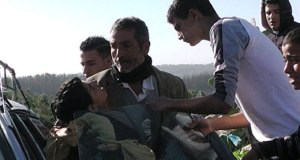
In this speech Obama failed to ‘create the change that you want to see’, if indeed he wanted to picture peace as justice and for Israelis to identify with Palestinians. Instead, he reinforced the prevalent Israeli view that their security takes precedence over justice for Palestinians (in the form of the ending of occupation and independent statehood). The speech reassures Jewish Israelis that they should repeat their hegemonic narrative of victimhood and persecution, according to which the question of justice pertains primarily to righting the wrong of past generations through present force and might. Seeing itself in the mirror of American power, when asked to see the world through Palestinian eyes, this Jewish Israeli narrative can see only that a Palestinian child is being beaten, not that we are beating the Palestinian child.

No justice, no peace.

Planning Peace from Afar: Stop Repeating the Trauma

Photo from Jürgen Stroop’s report to Heinrich Himmler from May 1943 and one of the best-known pictures of World War II.
The original German caption reads: “Forcibly pulled out of dug-outs.”

Samir ‘Awad being evacuated from the scene after being shot, 15 January 2013. Photo: Nasar Mghar

Samir ‘Awad being evacuated from the scene after being shot, 15 January 2013. Photo: Nasar Mghar

In an expression of unbridled American optimism, former diplomat Dennis Ross, a key figure in the post-Oslo process, published in today’s (3 March 2013)  New York Times a 14-point agenda for reviving the halted peace process and reviving the two-state solution to the Israeli-Palestinian conflict. In principle, there is nothing wrong with being optimistic in an effort to imagine the achievement of peace, but ungrounded optimism can become the grounds for the lost hope of failure. Ross is aware that ‘most Israelis and Palestinians today simply don’t believe that peace is possible’ and that ‘neither side believes that the other is committed to a two-state outcome’, arguing that each side needs to overcome ‘the problem of disbelief’. So, he proposes a package of trust and confidence building measures, most of which can be undertaken unilaterally but in coordination by each side, that ‘can actually generate changes that ordinary citizens on both sides could see and feel’. Never mind that the whole approach of ‘confidence building measures’ championed previously by Ross and US administrations has led into the cul-de-sac of disbelief and despair. He has learned from his mistakes and seeks to repeat them perfectly.

One could take issue with Ross’ specific proposals, which reflect American attunement with Israeli rather than Palestinian concerns. He suggests that the Israeli government from now restrict its settlement building to the blocs in the West Bank that Israel intends to keep as part of any future agreement, while preparing to relocate those settlers who currently live outside those blocs. He does not suggest that Israel dismantle all settlements established since 2001, as required by the 2003 Road Map. Ross does call for Israel to expand the scope of Palestinian self-government and policing in Areas A, B and C of the West Bank, but he does not insist on an end to Israeli military incursions into Area A, the 18% of the West Bank that’s supposed to be under the Palestinian Authority’s full civil and security control.

Last week, there were demonstrations throughout the Palestinian occupied territories in support of the prisoners on hunger strike. In an impassioned appeal to the Israeli public on Israel Channel 2 news on 24th February 2013, PA official Jibril Rajoub spoke of the prisoners and their detention without trial in Israeli prisons as the most sensitive issue of the occupation, the focus of unrest that’s been labeled the ‘prisoners’ intifada’. But that’s not on Ross’s radar. Nor are the numerous, unpunished attacks on Palestinians and their land by extremist settlers, despite the ‘culture of impunity’ regarding such attacks, described in detail in a recent UN Human Rights report. There is no mention in Ross’s list of the ongoing friction caused by the completion of the separation barrier, which entails seizing Palestinian land and separating owners from unhindered access to it. The planned dispossession of Palestinians in the South Hebron hills to clear way for military Firing Zone 918 also does not get Ross’s attention. The weekly catalogue of shootings of Palestinians by Israeli soldiers, their excessive use of force to suppress demonstrations, recorded by the Palestinian Center for Human Rights, does not register for Ross as part and parcel of the insufferable burden of occupation that must be relieved before Palestinians can be convinced that the Israeli government is serious about ending its control over them.

Nonetheless, Ross suggests that the Israeli government take some concrete steps that would be felt and seen by Palestinians. By contrast, the measures he proposes that the PA take would not make much difference to the daily lives of Israelis. Instead, he says that the PA should ‘speak’ of two states, ‘acknowledge’ the existence of a Jewish as well Palestinian national movement, ‘show’ Israel on their maps (though he does not ask for a parallel redrawing of Israeli maps so that they show the ‘green line’), and end ‘incitement’. The only practical step that Ross asks of the PA is to build permanent housing in the Palestinian refugee camps (presumably to reassure Israelis that Palestinian refugees will forego their ‘right of return’ to their former land now in Israel). As he acknowledges that Palestinian security forces fulfill their obligations to collaborate with Israeli forces in preventing armed attacks on Israelis (which he’d like the Israeli government to acknowledge publicly, so long as the PA is equally generous about Israeli good-will measures, such as treating Palestinian patients in its hospitals), Ross does not include in his plan increased PA security action against armed militants. Nor does he explain how the PA should continue to repress Palestinian militant opposition to the occupation while also (as he recommends) focusing on ‘the rule of law’.

What then is Ross asking of the PA, with all this speaking, acknowledging, showing and abstinence from inflammatory language? He is asking that the PA take rhetorical responsibility for the state of mind of the Jewish Israeli public. Ross grasps well that much of the Israeli public feels insecure about its existence, dubious that further withdrawal from territory seized in 1967 will bring peace and security – although the two recent withdrawals he mentions, from southern Lebanon in 2000 and Gaza in 2005 were both unilateral Israeli moves, in the face of incessant armed and civil opposition to their presence. But such an approach, according to which the PA offer Israelis the reassurance they want to hear repeatedly, assumes that the Palestinians (and other Arab nations, and Islamic states) are the source of Israeli insecurity. This is a false assumption, one that does not go deep enough into the trauma that needs to be acknowledged and worked through if peace is to be first imagined, and then made real. The clue is on another page of the same issue of the New York Times, a chilling report on recent research about the Holocaust that dramatically increases the known number of Nazi ghettos, and concentration, slave labour, prisoner-of-war, euthanasia, abortion and brothel camps. Well-meaning, instrumentalist, technocratic, pragmatic ‘confidence-building’ measures cannot be the remedy for a conflict in which a traumatized people has brought trauma to another. The headline of Ross’s piece is ‘To Achieve Mideast Peace, Suspend Disbelief’. The last phrase should be ‘Stop Repeating the Trauma’.

Warsaw Ghetto 1943