Tag Archives: settlements

40 Years Ago I Became a Settler

40 years ago to this day I became a settler in the Occupied Palestinian Territories. I certainly did not think of myself as a settler at the time. Aged 23 and after a decade growing up in a Zionist youth movement in the UK, I was “making Aliyah,” immigrating to Israel to fulfil the first priority of a practical Zionist. I was going to take my place in the collective national project of the Jewish people in the State of Israel. My first destination was an absorption centre in East Talpiot in Jerusalem. By chance, it was in walking distance of the campus of the Institute for Youth Leaders from Abroad where I had spent five months of a gap year in Israel, in 1978. I do not recall ever going to look at the new suburb of East Talpiot being built close by during my time there, but by the time I arrived on New Year’s Eve 1984, it was a well-established and built-up neighbourhood. We knew that the building we were in had been Jordanian before 1967, but I also did not ask myself about the history and fate of the Palestinian teachers’ training college that had been there.

I was well aware that East Talpiot is in East Jerusalem, over the Green Line that marked the border between Israel and Jordan from 1949 until 1967, as illegal under international law as any other settlement in the Occupied Palestinian Territories. That did not matter to me, as in my mind it was clear that whatever future diplomatic agreements there might be between Israel and Jordan or the Palestinians, Jerusalem must remain undivided under Israeli sovereignty. That was not negotiable. East Talpiot was one of the ring of new neighbourhoods built around Jerusalem after the conquest of East Jerusalem in the June 1967 war. My family’s only relative living in Israel, my second cousin, lived in another of them, French Hill, and I could no more imagine her and her family having to move out of their neighbourhood than I could my own family having to leave our home in Manchester.
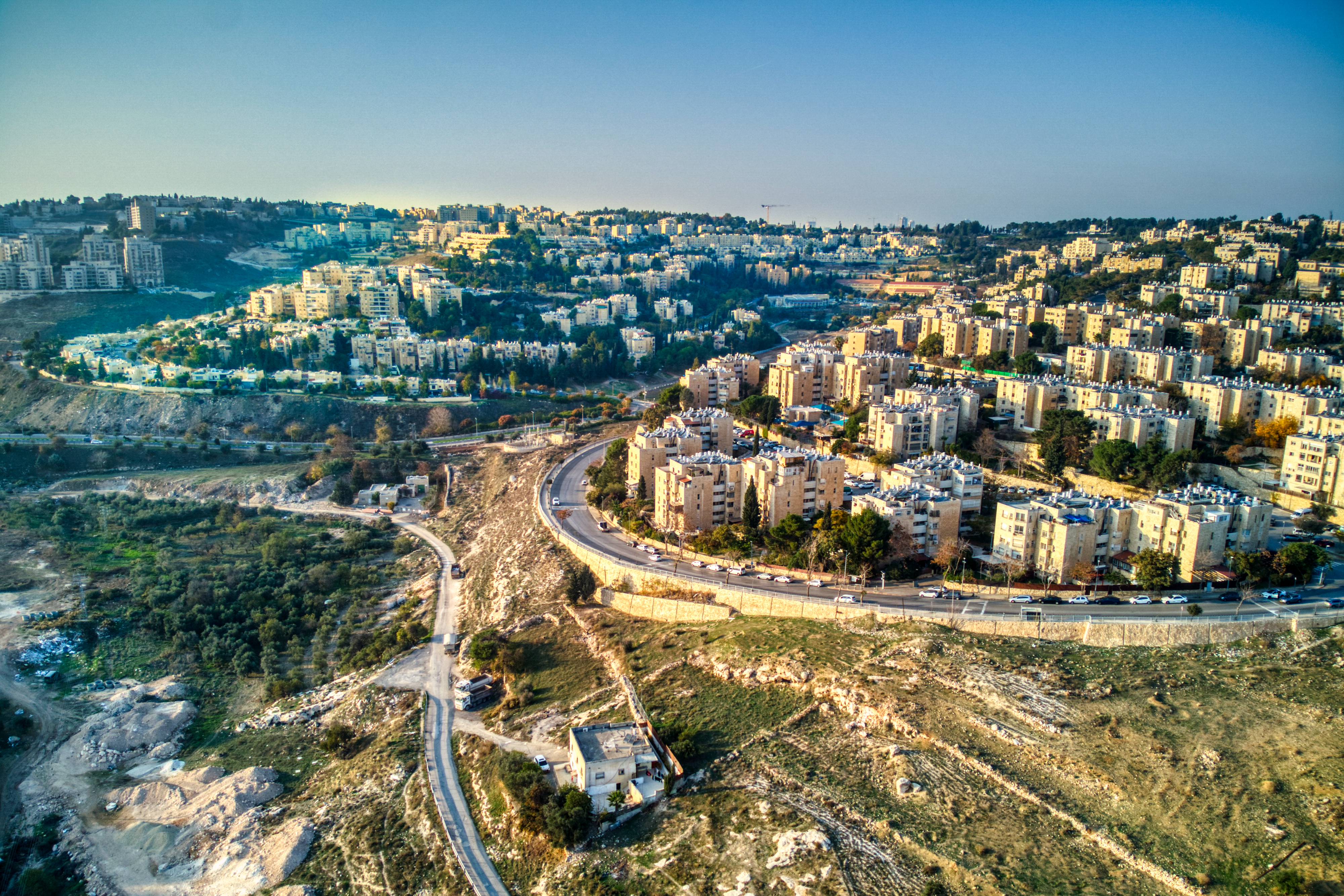
East Talpiot. Photo by By Hagai Agmon-Snir

A decade later, in 1995, as I made my preparations to leave Israel and return to the UK to take up my first full-time academic position, I had misgivings about abandoning a campaign I was involved in to stop another Jerusalem suburb being built. Through a dialogue group between West Jerusalem Israelis and Palestinians in the West Bank town of Beit Sahour, I had a stake in preventing the building of Har Homa on the land of Jebel abu Ghneim, owned by Beit Sahouris as well as Palestinians in the neighbouring village of Umm Tuba and Jewish owners from before the 1948 war. A colleague assured me that Har Homa would never be built, and indeed soon after I left the Israeli government shelved the plan. However, the victory was short-lived. After the right-wing Likud government defeated the Labour-led “peace government” in the 1996 elections, the settlement plans were revived and went ahead despite further Palestinian appeals to the UN. I did not see Har Homa until years later in 2012, when it had about 25,000 residents and looked as established as the other Jewish settlement suburbs built around Jerusalem since 1967, including East Talpiot. Har Homa is another brick in the wall obstructing Palestinian nationhood.
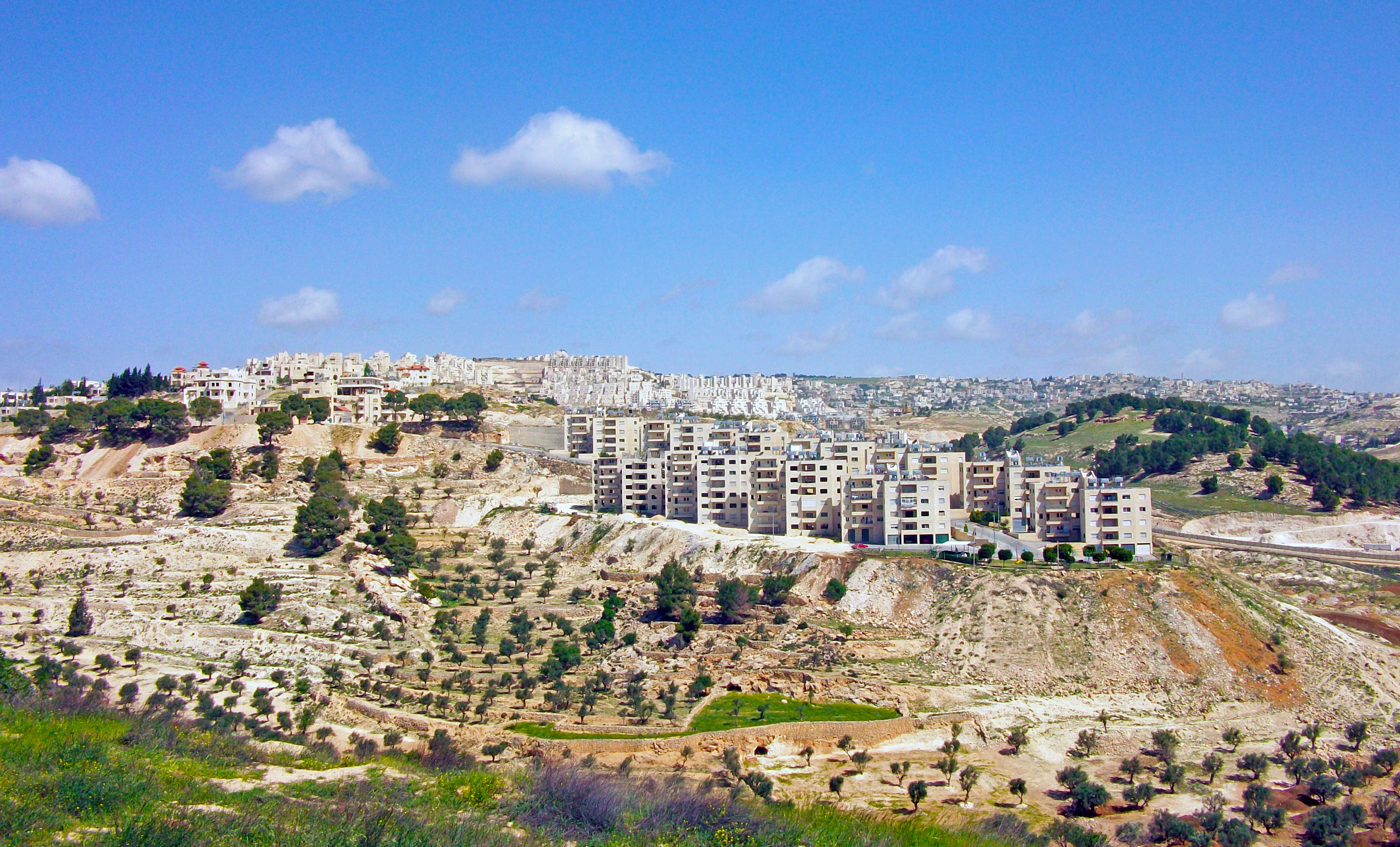
View of Har Homa from Beit Sahour. Photo by Daniel Case.

What had changed for me between 1985 and 1995? A good deal, including immersion in Israeli activism against the Occupation and for peace. It was not simply that after several months in the absorption centre I moved to West Jerusalem and lived there until I left. In 1985 I had not asked myself on whose land East Talpiot was built. I lacked the curiosity to find out that 1,343 dunams had been taken from the neighbouring village Sur Baher and 544 dunams from another village, Jabel Mukaber. I had never asked the Palestinians in those villages how they felt about East Talpiot being built on their land and to obstruct their development. By 1995 I had spent many hours in dialogue and organising meetings with Palestinians from Beit Sahour who had become my friends. Through the practice of dialogue, even one that did not undo the relationships between occupier and occupied, I had unlearned the arrogance that allowed me to think that I could tell Palestinians that the Israeli claim to sovereignty over all of Jerusalem is not negotiable. I had learned equality, to treat Palestinians and their rights as equal to Jewish Israeli rights. I had unlearned, at least to some degree, the mentality of the settler I had arrived in the country as.
A vision of peace without imagination: Trump’s deal

By Norma Musih and Jon Simons

The proposal of peace plans, for Israel-Palestine or anywhere, are opportunities for political imagination. Even when all that is imagined is the cessation of hostilities, peace plans embody a remarkable human capacity to picture a situation that does not yet exist, to compare it favorably with the current situation, and to act towards making real the vision of a better future. Who could disagree that the people of Israel and Palestine deserve a better future in which they are not condemned “to live by the sword”, in which they can live in security, prosperity and the fulfillment of their human rights? The drafting of peace plans is a crucial step towards diplomatic negotiations and reconciliation of combatants. The Trump plan casts itself as such an act of political imagination, as a “Vision for Peace, Prosperity and a Brighter Future” which people should read so they can “imagine how its concepts will actually dramatically improve their lives,” and which will be the basis for a future peace agreement.

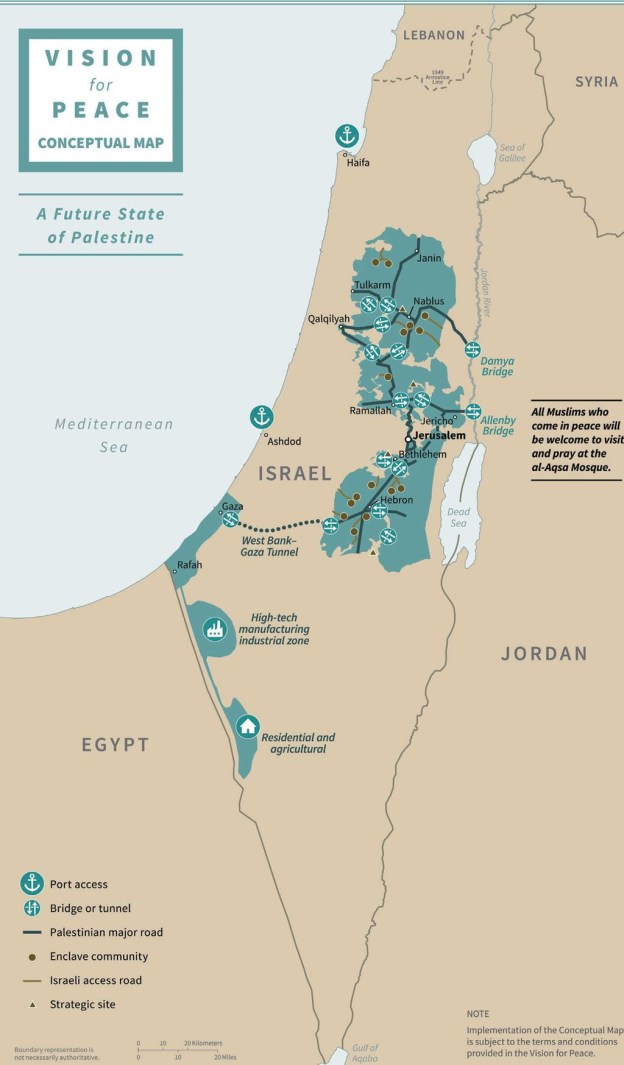
The Trump “deal of the century” has rightly been condemned as a fake peace plan for Israel-Palestine by many potential participants in the peace process. Trump’s initiative is not the first intervention by a western power seeking to “bring peace to the middle east” on behalf of the Palestinian people. The colonial roots of such efforts can be traced from the Balfour declaration to the Oslo agreements. Palestinian official and popular rejection came quickly, including demonstrations in the West Bank. On Saturday February 1st 2020 Israeli anti-occupation groups rallied in Tel Aviv under the banner “Yes to a peace agreement; No to an annexation deal,” in response to the Israeli’s government’s interpretation of the plan that it had been given a green light to annex the Jordan Valley and the settlements in the West Bank by the Trump administration. The Israeli human rights group B’Tselem condemned the proposal for a Palestinian “state” comprised of fragmented enclaves as apartheid, like the South African Bantu states.

Trump plan map
Proposed map of Trump peace plan

Certainly, the most appalling failure of the vision is that it has been conceived in the absence of Palestinians. This is also a failure of the imagination. Hannah Arendt conceived of political imagination as the relationships that emerge among people who can envision each other’s points of view. Famously, in her 1963 report on the trial of Nazi Adolf Eichmann, she faulted him not with being an evil monster but with a “lack of imagination,” an inability to imagine himself in the place of the others whom he sent to the concentration camps. The authors of the Trump plan, led by his son-in-law Jared Kushner, are guilty of such lack of imagination.

Nowhere in the plan is this lack of imagination more shocking than its scant and biased treatment of refugees. While acknowledging that the conflict is about refugees as much as territory and security, it sets up a false equivalence between the Palestinian refugees who have “suffered over the past 70 years” and the “similar number of Jewish refugees [who] were expelled from Arab lands.” No mention of Palestinians being expelled by Israel, of the Nakba, of the systematic erasure of Palestinian presence in what became Israel. No mention of the systematic discrimination faced by Jews from Arab lands in Israel, which promised to be their national home. The plan claims to seek a “just, fair and realistic solution to the Palestinian refugee issue” but it flagrantly denies the “right of return” established in the 1948 U.N. Declaration of Human Rights, Par. 13, Section 2: “Every person has the right to leave any country, including their own, and to return to their country.” Palestinians must renounce not only their individual and collective right to return to their former homes in Israel according to the Trump deal, but also accept that Israeli security concerns will trump (pun intended) their right to return to what would become Palestine. The failure of imagination is enormous, as if people have no attachment to home, as if the violent loss of home can be bartered away by a financial compensation scheme under US control.

Arendt’s condemnation of Eichmann’s lack of imagination was controversial, as if she were being dismissive of the enormity of his crimes. Those criticisms missed the point of her claim about the banality of evil, about how such a horrendous event as the Holocaust happened not because of deep evil intentions but because of thoughtlessness, the failure to imagine oneself in the shoes of another. The Trump deal is banal because of its lack of imagination. And if it is imposed on the Palestinians, who can not accept it without ceasing to be a people with rights, it will be as disastrous for them as the disaster – the Nakba – which has already befallen them. Moreover, it will be disastrous also for Jewish Israelis. Not only will they be condemned to be perpetrators of an increasingly apartheid regime, but also their citizenship will be flawed: they will not be equal until the Palestinians are equal.