
Memorial in Rabin Square

Since 6th February, 2013, 20,000 people have signed up to a Facebook campaign calling on US President Barack Obama to address the Israeli people from Rabin Square during his upcoming visit to Israel next month. What does this direct, socially-mediated call to Obama mean? What do those Israelis want from Obama? The answers to those questions are simultaneously encouraging and dispiriting, indicating both grounds for hope and despair.
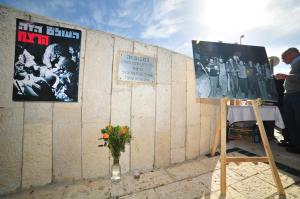
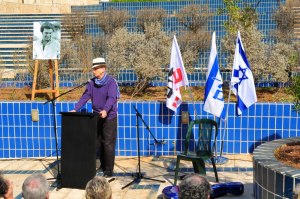
To begin with, there is the powerful symbolism of Obama speaking form the same platform as former Israeli Prime Minister, Yitzhak Rabin, did on the night he was assassinated by a right-wing extremist on 5th November, 1995. The large square in central Tel Aviv, formerly known as Kings of Israel Square, was renamed after Rabin following his murder, and a small group still visits the memorial to Rabin at the side of the square, on the spot where he was shot in the back, after addressing a large pro-peace rally. Israeli public support for the Oslo process, fiercely contested by the settler movement and Israeli right-wing, as well as Hamas and Islamic Jihad on the Palestinian side was waning at the time. The key slogan for the rally was: ‘yes to peace, no to violence’, but violence prevailed. Whether or not the terrorist’s shots killed the Oslo peace along with Rabin is another question, but that is how it seemed to those Israelis who saw in Rabin’s death the sacrifice of an idealized ‘warrior for peace’ and the embodiment of the Jewish Israeli public who had voted for him – largely Ashkenazi, middle class, educated, secular, and culturally hegemonic. The mourning for this idealized figure became melancholic, becoming an ongoing state of being, in which love was not redirected to another champion of peace (or peace initiative), but wrapped up in narcissistic identification with the lost object. In brief, some of the symbolism of Obama speaking from Rabin’s platform refers to melancholic mourning in which the loss of peace is mourned, but peace is not pursued actively.
Yet, perhaps if Obama speaks from Rabin’s platform, all that emotional investment in mourning peace will instead be transferred to Obama. Perhaps Obama will bring the peace that Rabin was prevented from making. Such hopes were attached to Obama on his election in 2008, among others by veteran peace activist Uri Avnery in his weekly column. Not coincidentally, the peace group that Avnery heads, Gush Shalom, published a notice on 8th February 2013 in the Ha’aretz newspaper (as it does each week) that repeats the expectation that Obama will sort things out for Israel: ‘President Obama/Will ask for/Clear answers/On Peace, The Palestinian state, Occupation and settlements’. Obama’s political image, especially in those thrilling days of 2008, is one of hope. The Facebook campaign for Obama to speak for peace in Rabin Square is a campaign for hope that peace, not mourning for its loss, can fill Israeli hearts again. Obama can be our leader, another Moses, an African prince found in the bull rushes who will lead us to the Promised Land. I’d like to believe that myself. He could even Hebraize his name for the role, becoming Baruch Ben Ami.
But from the start, the expectations for Obama’s visit and progress to peace should realistically have been kept low. On 5th February 2013 the New York Times reported that the US president was ‘not expected to unveil concrete proposals for bringing Israelis and Palestinians together during his visit or initiate a specific new peace process’. The prevailing opinion is that on the agenda for his visit will be the ‘burning issues’ of the Iranian nuclear programme, the civil war in Syria, leaving the question of Palestinian-Israeli peace further down the list of priorities. Writing in Challenge, an on-line magazine, on 17th February 2013, Yaacov Ben Efrat of Israel’s Daam Party remarked that: ‘When Obama reaches P[alestinian] A[uthority] territory, he will see that his policy of appeasing the Israeli right has nearly killed the PA’. Obama has already been burned by the Palestinian issue and won’t want to take up the challenge again. Obama may utter some vague, uplifting phrases about peace, but offer no practical means to achieve it.
Ben Efrat also wrote that: ‘it will not be long until the unrest in the West Bank becomes palpable to the Israeli public on its side of the wall’. In the last few days, that is precisely what has happened, with Palestinian protests over the prisoners’ hunger strike, the death in custody of Arafat Jaradat, and the flare of up the regular clashes with violent, armed settlers, as explained by Noam Sheizaf in the +972 blog. The sidelining of peace, of the daily travails of the occupation for Palestinians, of the routine violence of extremist settlers and the institutionalised violence of the Israeli occupation forces and the settlement process, from Obama’s visit agenda may be overtaken by events. Precisely because of the expectations raised by a presidential visit, Palestinian protestors have good reason to show that they have not gone away, that their frustrations have not dissipated, that occupation is the burning issue, that peace is urgent. Interviewed on Israel Channel 2 news on 24th February 2013 about the unrest, PA official Jibril Rajoub called on Israel to make a clear choice – for peace and security, or settlements and annexation. ‘Don’t expect us to come with a white flag’, he said, ‘We are a people living, existing under a cruel, racist occupation for 46 years, which brings shame on Jewish history. Enough! Enough! Enough!’ There is nothing Obama could say to the Israeli who want to hear from him that is clearer about the need to end the occupation and move to peace than that.

 Picturing Peace