Tag Archives: middle-east

40 Years Ago I Became a Settler

40 years ago to this day I became a settler in the Occupied Palestinian Territories. I certainly did not think of myself as a settler at the time. Aged 23 and after a decade growing up in a Zionist youth movement in the UK, I was “making Aliyah,” immigrating to Israel to fulfil the first priority of a practical Zionist. I was going to take my place in the collective national project of the Jewish people in the State of Israel. My first destination was an absorption centre in East Talpiot in Jerusalem. By chance, it was in walking distance of the campus of the Institute for Youth Leaders from Abroad where I had spent five months of a gap year in Israel, in 1978. I do not recall ever going to look at the new suburb of East Talpiot being built close by during my time there, but by the time I arrived on New Year’s Eve 1984, it was a well-established and built-up neighbourhood. We knew that the building we were in had been Jordanian before 1967, but I also did not ask myself about the history and fate of the Palestinian teachers’ training college that had been there.

I was well aware that East Talpiot is in East Jerusalem, over the Green Line that marked the border between Israel and Jordan from 1949 until 1967, as illegal under international law as any other settlement in the Occupied Palestinian Territories. That did not matter to me, as in my mind it was clear that whatever future diplomatic agreements there might be between Israel and Jordan or the Palestinians, Jerusalem must remain undivided under Israeli sovereignty. That was not negotiable. East Talpiot was one of the ring of new neighbourhoods built around Jerusalem after the conquest of East Jerusalem in the June 1967 war. My family’s only relative living in Israel, my second cousin, lived in another of them, French Hill, and I could no more imagine her and her family having to move out of their neighbourhood than I could my own family having to leave our home in Manchester.
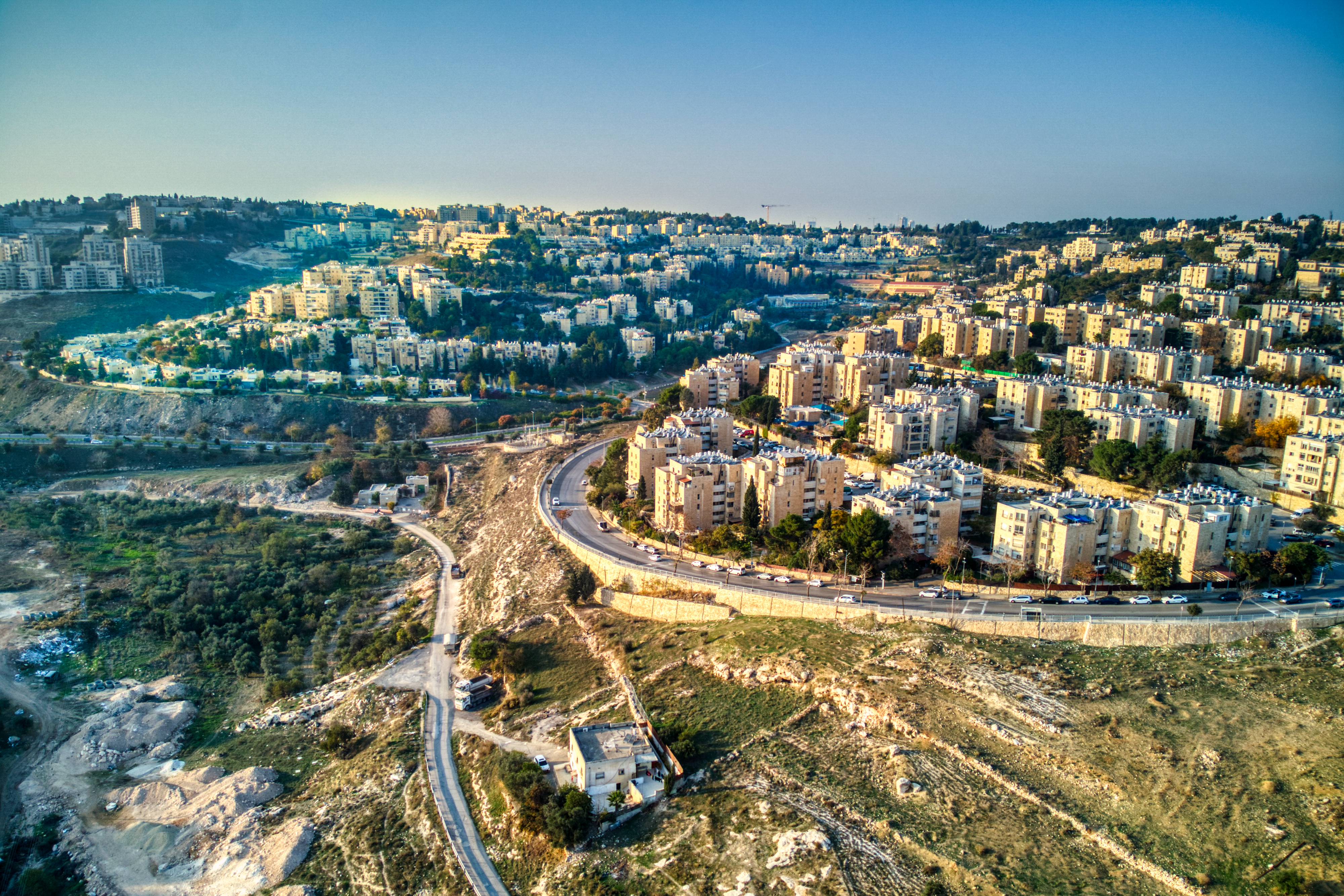
East Talpiot. Photo by By Hagai Agmon-Snir

A decade later, in 1995, as I made my preparations to leave Israel and return to the UK to take up my first full-time academic position, I had misgivings about abandoning a campaign I was involved in to stop another Jerusalem suburb being built. Through a dialogue group between West Jerusalem Israelis and Palestinians in the West Bank town of Beit Sahour, I had a stake in preventing the building of Har Homa on the land of Jebel abu Ghneim, owned by Beit Sahouris as well as Palestinians in the neighbouring village of Umm Tuba and Jewish owners from before the 1948 war. A colleague assured me that Har Homa would never be built, and indeed soon after I left the Israeli government shelved the plan. However, the victory was short-lived. After the right-wing Likud government defeated the Labour-led “peace government” in the 1996 elections, the settlement plans were revived and went ahead despite further Palestinian appeals to the UN. I did not see Har Homa until years later in 2012, when it had about 25,000 residents and looked as established as the other Jewish settlement suburbs built around Jerusalem since 1967, including East Talpiot. Har Homa is another brick in the wall obstructing Palestinian nationhood.
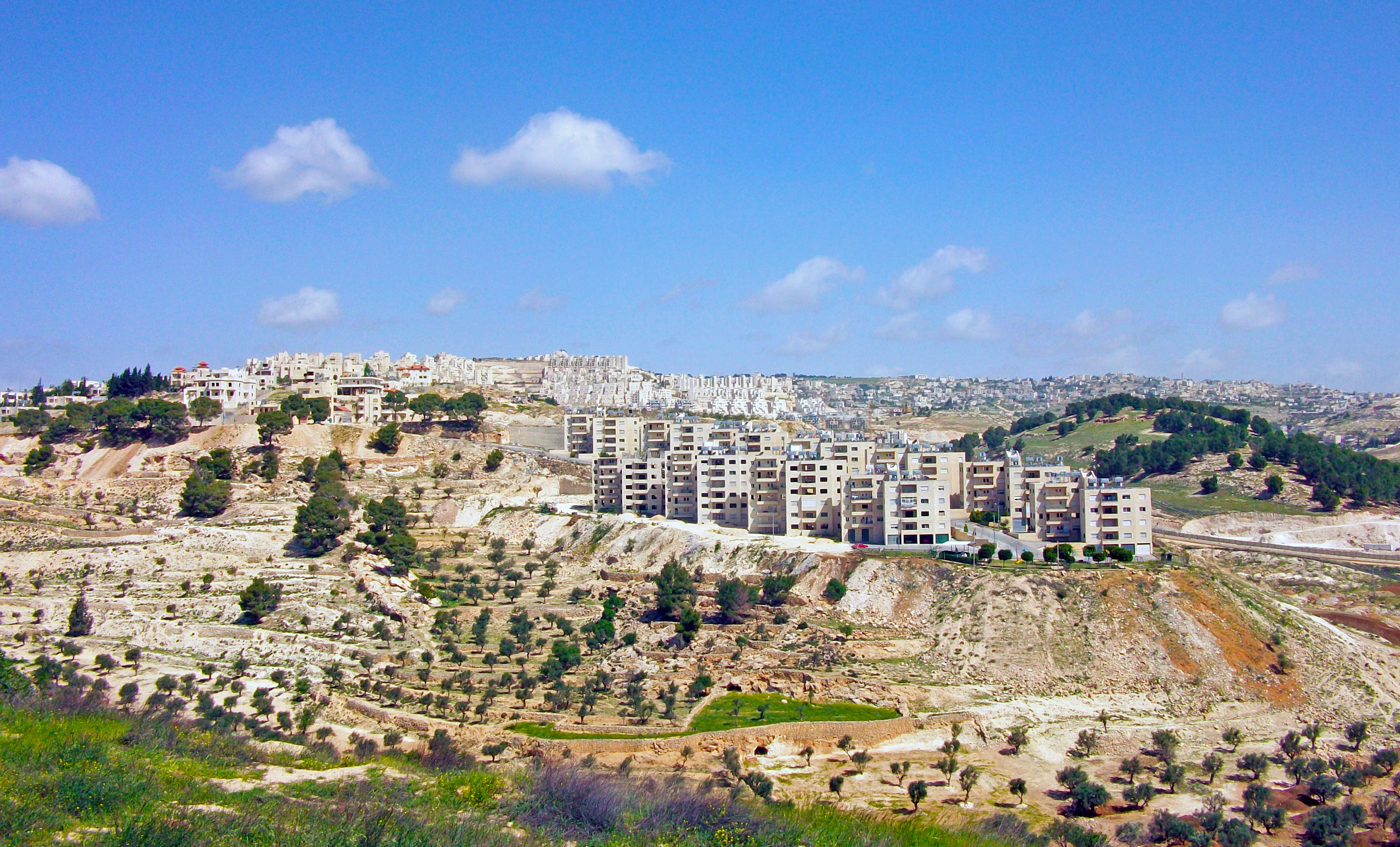
View of Har Homa from Beit Sahour. Photo by Daniel Case.

What had changed for me between 1985 and 1995? A good deal, including immersion in Israeli activism against the Occupation and for peace. It was not simply that after several months in the absorption centre I moved to West Jerusalem and lived there until I left. In 1985 I had not asked myself on whose land East Talpiot was built. I lacked the curiosity to find out that 1,343 dunams had been taken from the neighbouring village Sur Baher and 544 dunams from another village, Jabel Mukaber. I had never asked the Palestinians in those villages how they felt about East Talpiot being built on their land and to obstruct their development. By 1995 I had spent many hours in dialogue and organising meetings with Palestinians from Beit Sahour who had become my friends. Through the practice of dialogue, even one that did not undo the relationships between occupier and occupied, I had unlearned the arrogance that allowed me to think that I could tell Palestinians that the Israeli claim to sovereignty over all of Jerusalem is not negotiable. I had learned equality, to treat Palestinians and their rights as equal to Jewish Israeli rights. I had unlearned, at least to some degree, the mentality of the settler I had arrived in the country as.

Who “only understands force”? On the limits of force in politics

The sudden, rapid and unanticipated collapse of Assad’s Ba’athist regime in Syria a few days ago is an historic episode that demonstrates the limitations of force in politics. A brutal regime that had crushed dissent for decades by using military and police violence, torture, incarceration and mass executions of opponents imploded in a matter of days. Yes, it did so in the face of an armed offensive by Hayat Tahrir al-Sham in the north of the country whose success soon prompted other armed rebels against the dictatorship to join in, notably the Southern Operations Room which seized control of Damascus. There were some battles on the roads to Aleppo, Hama, Homs and Damascus, but the key development was the melting away of the military might available to the regime. Soldiers stripped off their uniforms, abandoned their weapons and blended into the civilian population. The regime’s main ally, the Iranian government, evacuated its personnel because the Syrian government forces had no will to fight. The story here is that the seemingly formidable power of the regime vanished.

It is not surprising that some compared the regime’s collapse to the fall of the Berlin Wall in 1989, when German civilians demolished some of that symbol of the Soviet regime. These episodes in which regimes that rely on force and violent repression dissolve seem miraculous. Yet they are apprehensible according to theories of power that grasp that political power and obedience ultimately come from below, from the consent of those who are ruled. In Gene Sharpe’s approach to these theories, which were part of the playbook for the democratic movements of the Arab Spring, the emphasis is on non-violence as the appropriate strategy to bring down repressive regimes.

That was not quite the case in Syria, but the essence of the theory still pertains. Repressive regimes such as Assad’s dictatorship work only so long as the people believe the regime is to be feared and so long as the government’s agents believe that the people are afraid of them. Without the mantel of fear, statues of Assad, like the idols in Abraham’s father Terah’s shop, are just lumps of stone and metal. When the compact of fear fails for significant numbers of people, the repressive emperor has no clothes. The soldiers’ uniforms no longer signify that they command fear from the population, so they take them off and flee, afraid themselves that what they have done to others will be done to them. And hence the latest episode in the long struggle against Assad’s regime was relatively bloodless.

A truck pulls the head from the toppled statue of late Syrian president Hafez al-Assad through the streets of the captured Syrian city of Hama © MUHAMMAD HAJ KADOUR / AFP

Other autocratic regimes in the Arab world would do well to heed the warning about the limitations of violent repression and follow the example of those who have taken some steps towards democratic reform. But there is another regime in the region that relies on force and violent power, one which has never even sought to make itself legitimate in the eyes of its subjects. The Israeli occupation of Palestinians in the West Bank and Gaza has at best offered some crumbs of its own economic prosperity to non-citizen Palestinians under its rule in return for acquiescence. It has never given them any grounds to consent to Israeli rule, to appropriation of land and resources, restrictions on movement, denial of rights, other than fear of the consequences of resistance, whether armed or non-violent.

The apartheid character of the Occupation becomes daily more evident, more nakedly an assertion of alleged Jewish rights and disregard for Palestinian rights. The Occupation regime becomes ever more dependent on bare force. Ironically, it is Israelis who tell each other that “they” (Palestinians, Arabs, Muslims) only understand force, while subjecting Palestinians to rule that will last only as long as occupied and occupier believe that brute force can sustain Occupation. “We will always live by sword,” repeats Netanyahu and as his words are echoed and enacted, it becomes a self-fulfilling prophecy. As Palestinian historian Rashid Khalidi put it in a recent interview with Ha’aretz, when asked if Israel had a real opportunity to break out of the cycle of bloodletting: “It’s been the Iron Wall since Jabotinsky. Force and more force. You’ve been trying to impose a reality that has sent shock waves throughout the Middle East since the 1920s.”

The Israeli government’s response to the toppling of Assad’s regime has been a massive unleashing of military violence to destroy as much as possible of Syria’s military capacity. Israel has also occupied the demilitarized buffer zone between Israeli and Syrian positions established by the 1974 armistice agreement between the two countries. Other governments are opening channels of communication with the new rulers in Damascus, but the Israeli government assumes that Hayat Tahrir al-Sham and its partners will use military force against Israel if they have the means or let them fall into the hands of others who will, such as Hezbollah. We don’t have the luxury of others to get to know these people, an Israeli spokesperson tells Channel 4 news, so first we bomb them. He might as well add: we only understand force.

There is no guarantee of if or when force will cease to work as the compact between occupier and occupied. So far in this phase of violence since October 7th 2023, only a few Israelis such as Soul Behar have refused to put on their uniforms. Most are too afraid that what they have done to others will be done to them, a fear which has also been brought from other places where terrible things were done to their ancestors. Palestinians under Occupation have already shown that they are no longer afraid of the force wielded by the occupiers, notably at the start of the First Intifada when most of the resistance to Occupation was non-violent or unarmed. But what if more Israelis begin to see themselves as Palestinians see them, as inflicting force as violent, merciless and devastating as the Assads’ assaults on their own people? And what if more Palestinians who have survived the violence and are subject to Occupation can see that competing with Israeli violence is not a winning strategy? Assad’s regime has fallen because of the limits of force in politics. The Occupation will end for the same reason.