
Are we, Israeli and Diaspora Jews, safer now that Huda Al-Sosi is dead? Do we sleep more easily, feel more secure on the street, less wary at work, worry less about our children’s futures, now that she is dead? She “was killed in an Israeli air strike on Oct. 23 which also took the lives of relatives. The status of her two children is unconfirmed,” according to the tribute to her on the We are Not Numbers website. Huda had not yet had a chance to contribute to the project which “tells the stories behind the numbers of Palestinians in the news and advocates for their human rights.” Now more than ever it’s vital to cherish the personhood of those, Palestinian, Israeli and others, who are being killed in this horrendous war, the Black Shabbat and the War on Gaza. “Every person has a name” goes the Hebrew song that is used on memorial days for soldiers and the Holocaust. Her name was Huda. Her colleagues describe Huda as ” a beacon of strength and kindness,” having “a way of lighting up any room with her infectious energy and her radiant smile.” I imagine myself back in my days of university teaching. Would I enjoy Huda being a student in my class? I think so, very much.
Maybe that’s not good enough though. In this time of turmoil and tension, perhaps some readers will insist that Huda’s “love of Palestine” and determination “to reveal to the world the stories and struggles of those living in the shadow of the Israeli occupation” mean she was a propagandist, an enemy of we Jews. She loved her country; is that wrong? Don’t you? Perhaps some readers will doubt the good standing of the organisations behind the project, Nonviolence International and the Euro-Mediterranean Human Rights Monitor because they are too Palestinian. Maybe I should have picked a better example, whose innocence could not be challenged. Here, then, is Reevana al-Hussain, a one year-old also killed in an Israeli airstrike. Nothing else is written about her on the Instagram post, but I saw a news clip of a despairing father crying at a bomb site somewhere in Gaza that his one year old daughter had been killed. When did she have time to become Hamas, he lamented. When indeed.

But we are safer, we’re told, not because Huda and Reevana are dead, but because they were “collateral damage” in the targeting of Hamas terrorists, who use the Palestinians civilian population as human shields. So, are, Israeli and Diaspora Jews, safer because Ibrahim Biari, a target of some of the intense, deadly and destructive bombing in Jabalia, is dead? He is said to have been responsible for some of the horrific Hamas attacks on October 7th, so he won’t be doing any more of that. But how many more Ibrahim’s will there be? Weren’t we told that we’d be safer after Hamas founder and leader Sheikh Yassin was assassinated in 2004, followed by his deputy Abdel Aziz al-Rantisi later the same year? And weren’t we told we would be safer after Yahya Ayyash, the Hamas “Engineer” who made the bombs for a series of horrendous suicide attacks from 1993-95, sabotaging the Oslo peace process, was killed in January 1996? No, his death was followed by four suicide bombings that killed seventy-eight Israelis in February and March 1996, undermining the authority of Shimon Peres as the successor of Yitzhak Rabin, the Israeli Prime Minister at the time of Oslo who was assassinated by a Jewish religious terrorist in November 1995. Netanyahu was elected in stead of Peres. There has not been another Rabin, another Israeli leader with the trust of enough Israelis to lead the country to peace.
None of the killing has made us safer, not in Israel-Palestine or in the Diaspora. Antisemitism always spikes when one of these wars happen, and this time even more so. Here in the UK, the official representative body of the organised community, the Board of Deputies, put out A GUIDE FOR JEWISH EMPLOYEES NAVIGATING WORKPLACE ISSUES ARISING FROM THE WAR IN ISRAEL. There’s some sound advice about addressing harassment, victimisation and discrimination. But when it comes to “How to handle difficult conversations” the guide offers Israeli hasbara talking points. The key point should be that Jews in the UK should not be held responsible for the actions of the Israeli government and military, just as Muslims in the UK are not responsible for the actions of Hamas. One is antisemitism, the other is Islamophobia. Instead, the Board of Deputies encourages UK Jews to make our safety dependent on defending what are almost certainly indefensible war crimes, if not genocide.
It cuts both ways, of course. Are Palestinians in Gaza, in the West Bank, in pre-1967 Israel, in the diaspora, safer because Hayim Katsman is dead? Hayim was an academic, someone I would have liked to meet as a colleague, who had also been active with Machsom Watch, given testimony to Breaking the Silence and (as I have done occasionally) spent time accompanying Palestinian farmers in the South Hebron Hills to protect them from settler and soldier harassment. No, Palestinians are not safer. Palestinians citizens of Israel are no closer to equality; Palestinians in the Occupied Territories are no longer closer to freedom, to independence; and Diaspora Palestinians are no closer to justice, to fulfilling their right of return.

No, none of us are safer because of all the killing. And none of us will be safer if more Hudas, Reevanas and Hayims are killed, with whatever justifications. There must be an immediate ceasefire. It’s being called for in Israel, especially by those for whom freeing the hostages is the highest priority. It’s being called for by progressive Jews in the Diaspora, such as the anti-occupation group in which I’m active, Na’amod. The call for a ceasefire is also heard at the many solidarity protests with Palestinians. Because a ceasefire is what is needed now, I joined one of those protests in my home city, Nottingham. It was not always comfortable for me, and I did not join in all the chants. But what is my discomfort when the alternative to a ceasefire is more Hudas, Reevanas and Hayims?

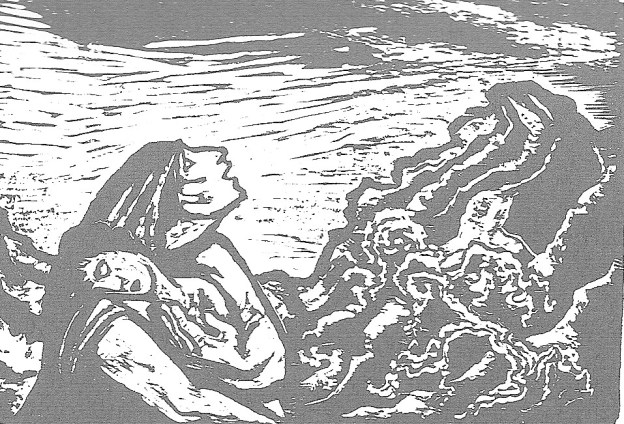




 Picturing Peace
