 For this first time (June 3, 2016) I’ve been able to participate in the monthly Palestinian-Israeli “Freedom March” held at “machsom haminharot,” an Israeli checkpoint on Route 60 to the south of Jerusalem, just by the Palestinian town of Beit Jala. The march is organized by a coalition, in which Combatants for Peace are a key partner, along with another organisation called “omdim beyachad” in Hebrew (standing together). The group has operated since an upsurge in violence in October 2015, offering a clear alternative to the usual pattern in which Israeli Jews and Palestinians each increase their antipathy to and fear of the other.
Being who I am, I had already seen video clips and photos of the event posted on social media, and was expecting the colourful cloud of balloons in the hands of the marchers when our bus from T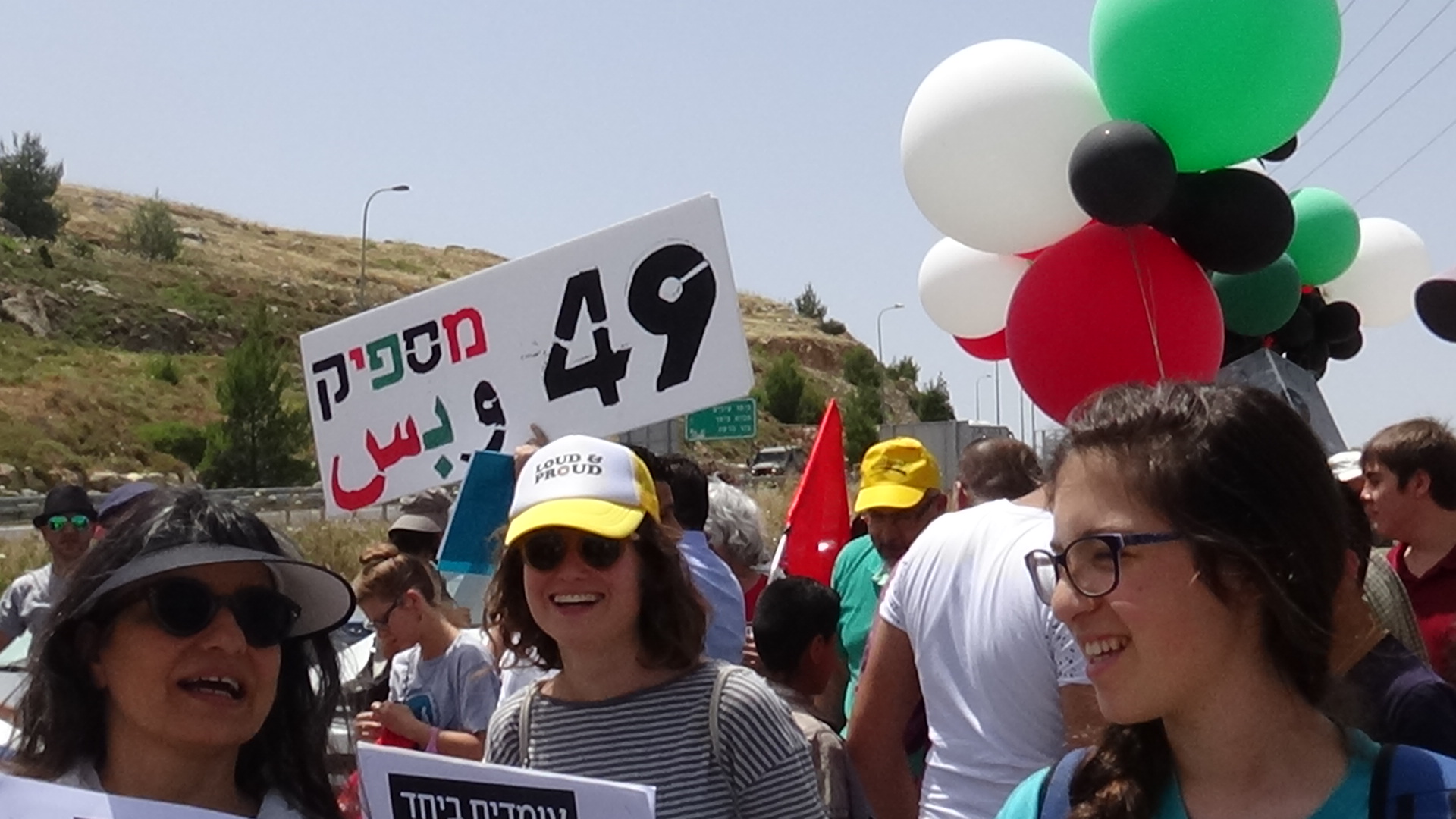 el Aviv arrived at the meeting point. The protest procession crossed the main road slowly, but did not block it, and amid the shouting of slogans and the displaying of placards, found shelter from the sun under the monumental concrete overhang of the separation barrier at this point.
 The protest ended with short speeches (translated into Hebrew and Arabic) by MK Aiman Oudeh, the charismatic leader of the Joint List, Leah Shakdiel, a long time feminist and social activist who represented the religious peace group Oz v’shalom, and representatives of Combatants for Peace. But I won’t talk today about the content of the speeches, the formulation of slogans (also translated and transliterated between Hebrew and Arabic), or even the ritual of releasing the balloons from under the concrete canopy into the freedom of the skies.
Instead, I want to focus on another part of the protest, the performance of a short scene in which Palestinians and Israelis role played soldiers and themselves in a typical encounter at a checkpoint, an encounter which involves verbal and physical violence, detention, constriction, humiliation, pushing people to the ground. The performance ends with a call for non-violence, to the applause of those who had gathered round the scene. An upper level of the walkway by the separation barrier served as a stage, and some but not all of the demonstrators gathered together to watch – although it was difficult to hear. Yet, the point is not the production or acting quality of this performance.
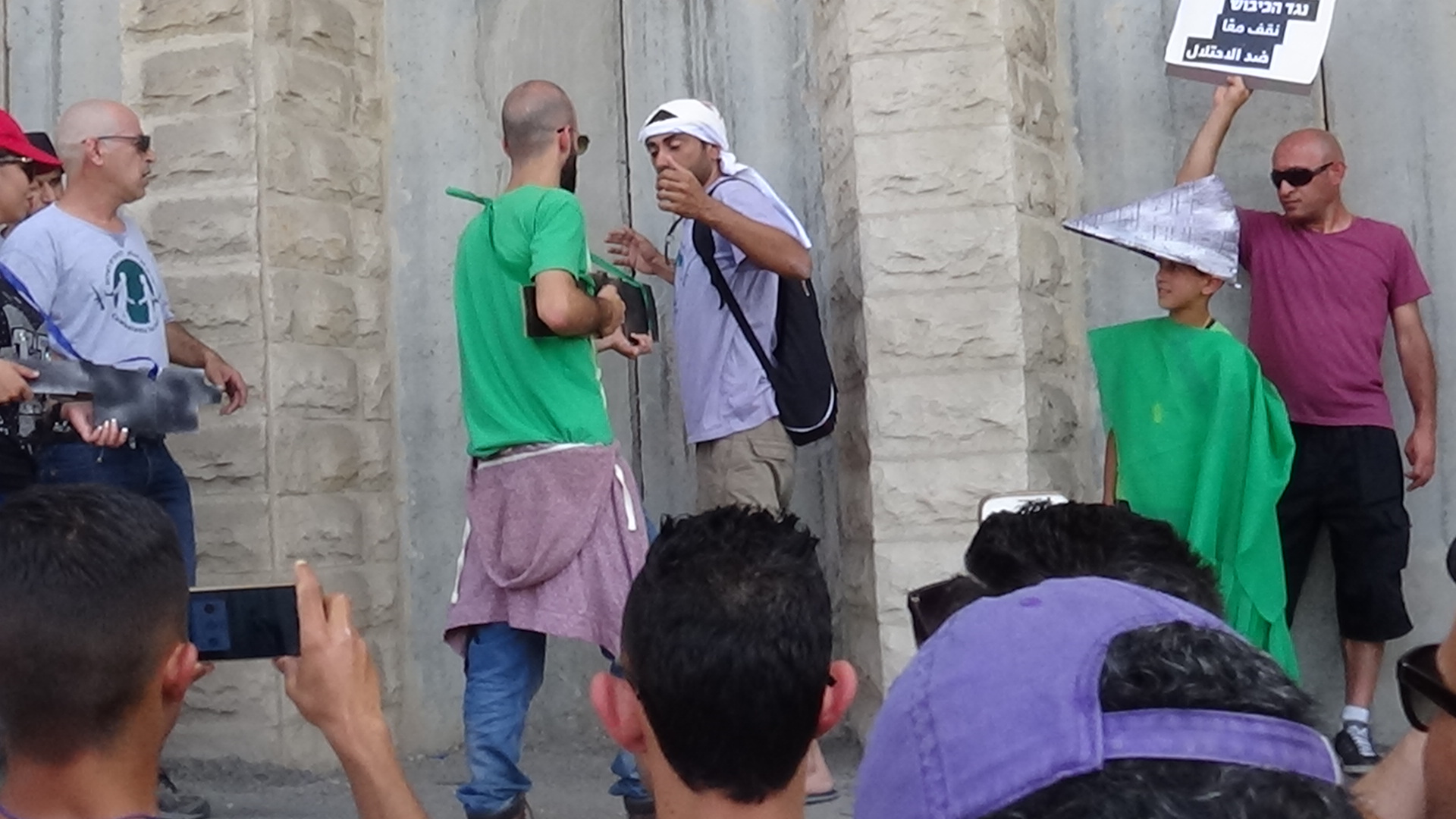 “Standing together” itself performs the vital political position of “refusing to be enemies” at a time of heightened tension, and in the context of a conflict to which no political resolution can be seen on the horizon. Combatants for Peace, along with other groups participating in the freedom march, such as the Bereaved Families Forum, and the Jewish-Arab parliamentary bloc Hadash, have performed this partnership, including acts of co-resistance, for years now. Combatants for Peace has also turned consistently to the “theatre of the oppressed” as a key element of its activities, often in more rehearsed ways and in settings in which the audience could participate more easily. They have documented some performances, and I have written about one I saw a few years ago.
In the setting of the demonstration the performance has particular significance. We can stand together, we can march together. But we can do so meaningfully better when we have learned to stand in the shoes of the other, whether through role play or dialogue or hearing each others’ stories. Combatants for Peace is a partnership of Israelis and Palestinians who have seen how their armed force and violence of the other feel from the point of the other. They stand together by seeing themselves from the other stands, When you have stood in the shoes of the other, and experienced with them what it’s like to commit or be subject to violence, then standing together just feels a whole better than standing against each other.
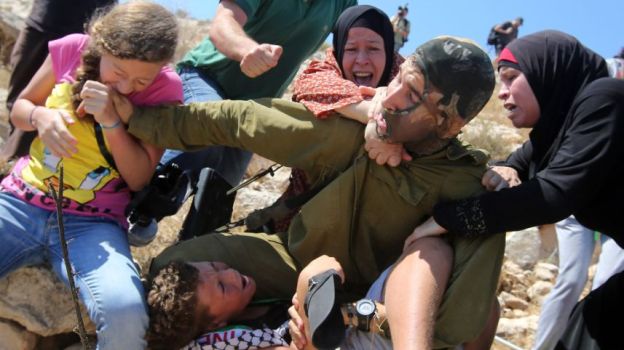
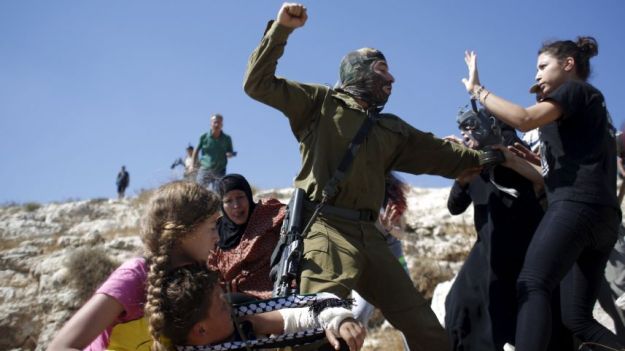

 Picturing Peace